EEMB News

January 15, 2015

UC Santa Barbara marine scientists lead a global review of the past and future of wildlife in the oceans.

September 11, 2014

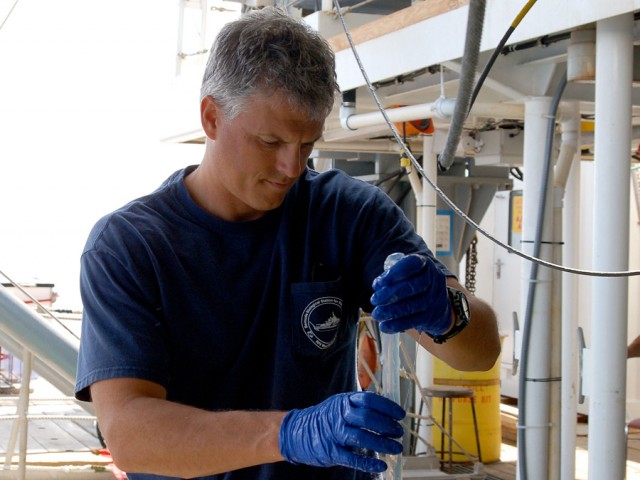
With a handful of motivated undergrads serving as his assistants, UC Santa Barbara marine scientist Craig Carlson spent part of his summer at sea on the South Pacific, leading the biogeochemical component of a multidisciplinary research cruise aboard the RV Kilo Moana.

For Carlson, professor and chair of UCSB’s Department of Ecology, Evolution and Marine Biology (EEMB), such trips are routine. For the students, however, they can be the experience of their college careers.

July 27, 2014

Complex social organization with caste formation is best known for social insects and naked mole rats. Ana Garcia-Vedrenne's study presented evidence for trematode parasite social organization involving reproductive “Queens” and defensive “soldiers", all clone members, genetically identical. She examined 14 trematode species that infect the California horn snail, Cerithidea californica. Half of these species appear to have a division of labor involving a soldier caste, while the other half provide information on colony structure when soldiers are lacking.

July 25, 2014

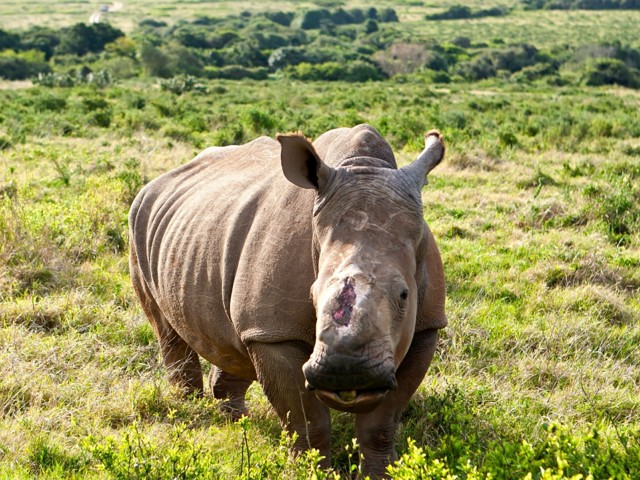
A UCSB scientist and colleagues warn that widespread contraction of the planet’s animal life could have harmful effects on human well-being.

July 24, 2014

Ecologists and social scientists from UCSB and Berkeley show how the far-reaching effects of such declines require far greater collaboration

April 28, 2014

UCSB professor’s research in East Africa shows biodiversity loss heightens the risk of disease transmission from animals to humans.

October 28, 2013

Dissecting a small sampling of tissue from an 18-foot oarfish late last week, UC Santa Barbara parasitologists discovered the elusive California sea monster hosted its own little monsters inside.

July 19, 2013

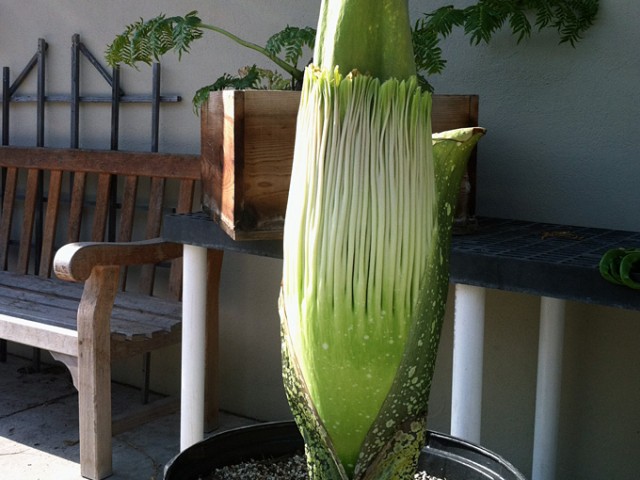
"Chanel," a Titan Arum, bloomed at the UC-Santa Barbara greenhouse at the end of July 2013. Chanel grew about 3" daily, ultimately attaining a height of 58”.

July 2, 2013

Feeling faint from the flu? Is your cold causing you to collapse? Your infection is the most likely cause, and, according to a new study by UC Santa Barbara research scientist Ryan Hechinger, it may be possible to know just how much energy your bugs are taking from you. His findings are published in a recent issue of The American Naturalist.

June 18, 2013

Parasites are ubiquitous. They feed on virtually every animal and even on each other. Yet, for all the parasites' collective contributions to biomass and biodiversity, conventional food webs don't account for the presence of these tiny and numerous consumers. A recent study featuring work by several UC Santa Barbara scientists focuses on the impact parasites have on food webs, with findings that are expected to alter our picture of who-eats-who.